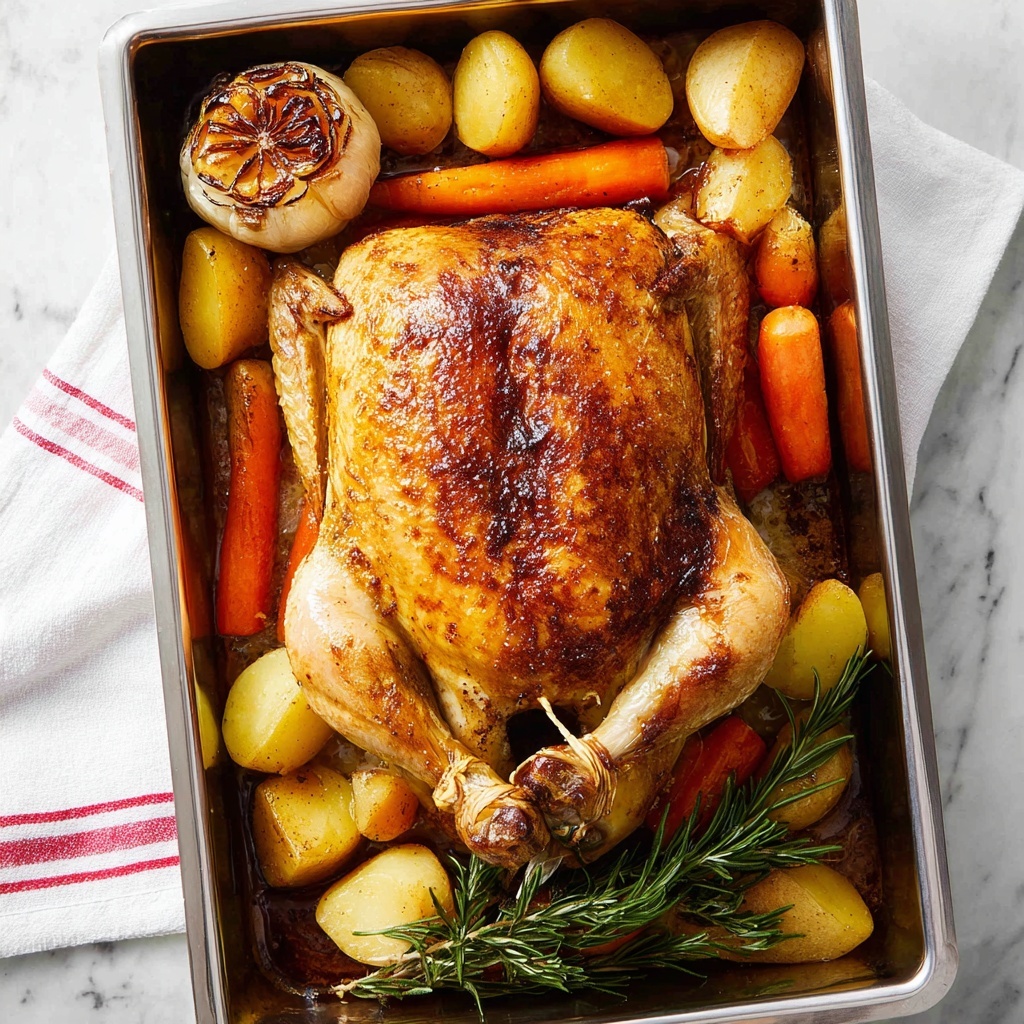
If you’re looking for a comforting, show-stopping meal that fills your kitchen with irresistible aromas, this Whole Roasted Herb-Infused Chicken with Lemon, Garlic, and Root Vegetables Recipe is an absolute treasure. The golden crispy skin, infused with fragrant herbs and zesty lemon, pairs perfectly with the tender, juicy meat and sweet, caramelized root vegetables. It’s a dish that tastes like a warm hug and makes any occasion feel special, whether you’re hosting family or simply treating yourself to an exceptional homemade dinner.
Ingredients You’ll Need
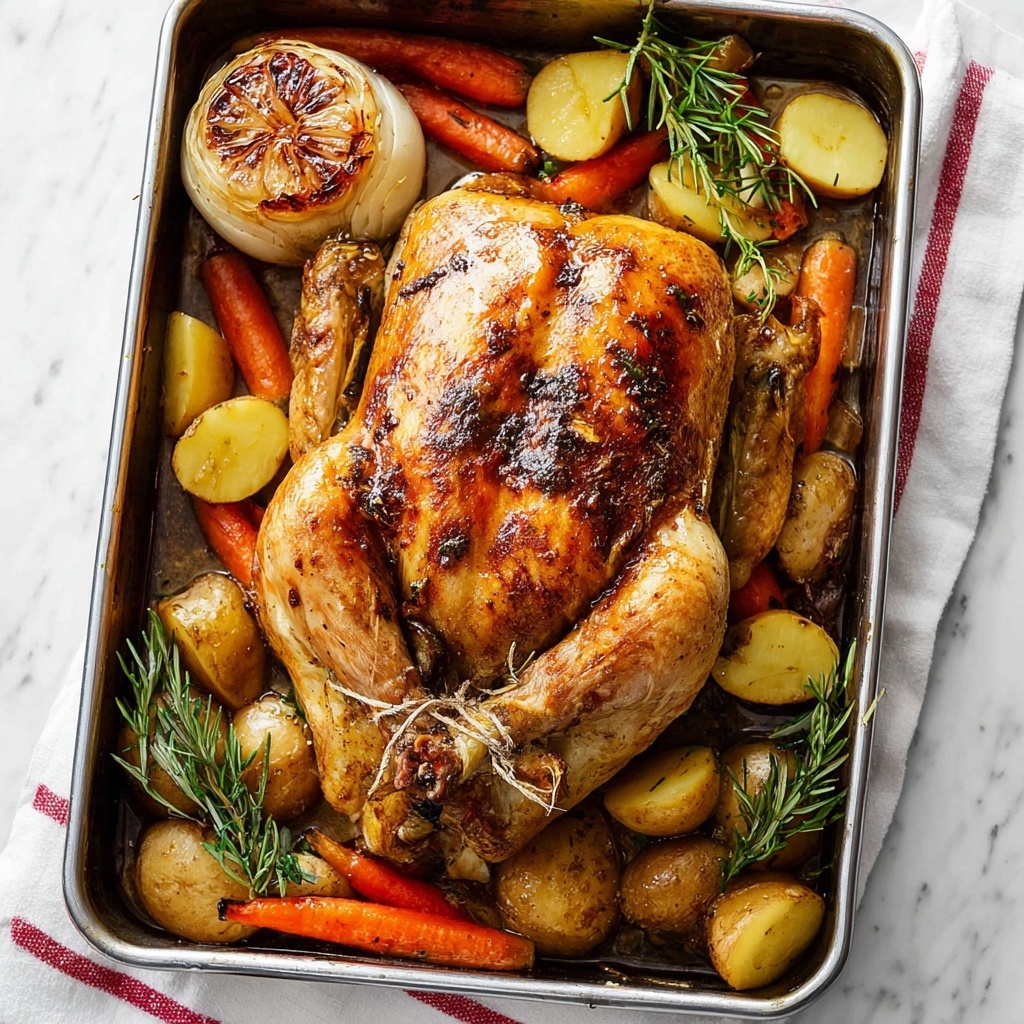
The secret to this stunning roast lies in simple, fresh ingredients that each bring their own magic to the table. From the creamy butter that keeps the chicken moist, to the bright lemon and earthy herbs that deliver incredible layers of flavor, every item is essential for achieving that perfect balance.
- Unsalted butter (4 tablespoons, softened): Creates a rich, herb-infused coating that melts into the chicken skin for deep flavor and moistness.
- Garlic cloves (3, finely minced): Adds a pungent, savory punch that complements the herbs beautifully.
- Freshly chopped herbs (2 tablespoons – parsley, thyme, rosemary): These fragrant herbs bring an aromatic earthiness that lifts the entire dish.
- Salt and ground black pepper (to taste): Essential seasonings that enhance all the flavors without overpowering them.
- Whole chicken (1): The star of the dish – tender and juicy when properly roasted.
- Lemon (1, halved or quartered depending on size): Brightens the flavor inside the cavity and adds freshness.
- Fresh thyme sprigs (3): Infuses a delicate herbal aroma from within the chicken.
- Fresh rosemary sprigs (3): Offers a piney fragrance that pairs wonderfully with roasted poultry.
- White onions (2, trimmed, peeled, and quartered): Caramelize around the chicken and add a natural sweetness.
- Head of garlic (1, halved crosswise): Roasts slowly releasing mellow, sweet flavors into the pan.
- White wine or chicken broth (½ cup): Adds moisture and builds delicious pan juices perfect for basting and gravy.
- Olive oil (for brushing): Helps get that golden, crisp skin on the chicken.
- Butter (for brushing): Used to finish the roast with extra richness and shine.
- Carrots (1 pound, peeled and cut into chunks or whole baby carrots): Roast to sweetness, adding color and texture.
- Potatoes (1 ½ pounds, cut into 1-inch pieces or halved baby potatoes): Soak up all those wonderful pan flavors while roasting tender.
How to Make Whole Roasted Herb-Infused Chicken with Lemon, Garlic, and Root Vegetables Recipe
Step 1: Prep Your Chicken
Start by removing your chicken from the fridge about 30 minutes before you plan to roast, allowing it to come closer to room temperature. This step ensures even cooking. Be sure to remove the giblets and neck if included, and pat the chicken dry—this helps achieve that coveted crispy skin.
Step 2: Preheat the Oven
Set your oven to 450°F (225°C) so it’s blazing hot and ready to give the chicken a beautiful initial sear that locks in those juices.
Step 3: Make the Compound Butter
Mix together the softened butter, finely minced garlic, freshly chopped herbs, salt, and black pepper to create an aromatic, spreadable butter. This compound butter is the essence of the herb infusion, building layers of flavor as it melts into the chicken’s skin.
Step 4: Season and Butter Under the Skin
Gently tease the skin away from the chicken’s breast and legs, being careful not to tear it. Spread about two-thirds of the compound butter under the skin to keep the meat tender and infused with herby goodness while roasting. Season the outside and inside cavity generously with salt and pepper, then spread the remaining compound butter inside the cavity for that extra burst of flavor.
Step 5: Prepare the Roasting Pan and Finish the Chicken
Place the quartered onions and halved garlic head in a roasting pan brushed lightly with oil. This acts as a flavorful bed that also elevates the chicken slightly. Set the chicken breast-side up on top of this bed. Stuff the cavity with the halved or quartered lemon and fresh rosemary and thyme sprigs, lending its citrus and herbal aroma straight into the meat. Tie the legs together with twine and tuck the wings under for even cooking. Brush the chicken skin with olive oil to promote that golden crispness.
Step 6: The First Blast of Roasting
Pop the chicken into the hot oven and roast at 450°F for 15 minutes to develop a crispy, golden skin. Carefully remove the pan and baste the chicken with the pan juices to lock in moisture. If you’re adding your potatoes and carrots, now’s the time to place them in the pan, tossing them in the flavorful juices before sitting the bird back on top.
Step 7: Slow Roast at Reduced Temperature
Turn the oven down to 350°F and roast the chicken about 20 to 25 minutes per pound. Baste once or twice during this time, ensuring the meat cooks evenly and stays juicy. This stage allows the flavors to marry beautifully while the root vegetables gently caramelize.
Step 8: Finish with Butter and High Heat
Once the timer’s up, brush the chicken all over with butter for a luxurious finish. Crank the oven back up to 425°F and roast for an additional 5 to 15 minutes until the thickest part of the chicken hits an internal temperature of 165°F. If the chicken is already perfectly cooked, a quick 2 to 3-minute broil adds a final touch of crispiness.
Step 9: Rest Before Serving
Remove the chicken from the oven and let it rest for 15 to 20 minutes on a warm plate or cutting board. This crucial step lets the juices redistribute, keeping every bite succulent. Meanwhile, if your root vegetables need extra tenderness, roast them for another 10 to 20 minutes at 425°F.
How to Serve Whole Roasted Herb-Infused Chicken with Lemon, Garlic, and Root Vegetables Recipe
Garnishes
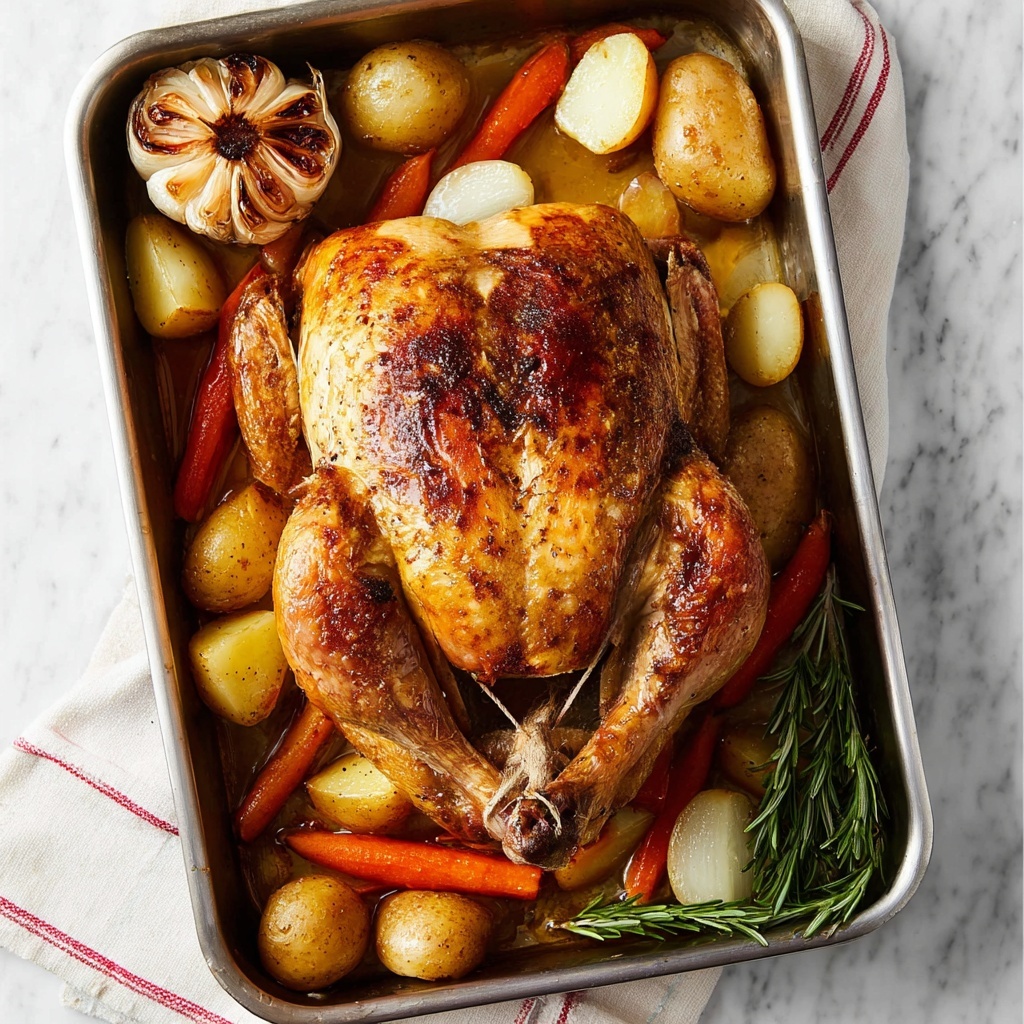
A sprinkle of freshly chopped parsley or extra lemon zest over your carved chicken adds a burst of color and brightness that elevates the presentation and flavor. A drizzle of the pan juices or a homemade herb gravy truly finishes this dish on a perfect note.
Side Dishes
This dish is wonderfully complete on its own thanks to the roasted root vegetables, but you can also serve it alongside a crisp green salad, creamy mashed potatoes, or even buttery dinner rolls to soak up every last bit of that savory goodness.
Creative Ways to Present
For a rustic touch, carve the whole chicken at the table and arrange it over the roasted veggies on a large wooden board. Alternatively, plate slices beautifully atop a nest of fresh arugula or baby spinach dressed with a light vinaigrette to balance the richness.
Make Ahead and Storage
Storing Leftovers
Place leftover chicken and vegetables in airtight containers and refrigerate for up to 3 to 4 days. Keeping the pan juices separately helps maintain moisture when reheating.
Freezing
You can freeze leftovers for up to 2 months. Wrap the chicken and vegetables securely in heavy-duty foil or freezer bags to prevent freezer burn. Thaw overnight in the fridge before reheating.
Reheating
Reheat in a preheated 350°F oven covered with foil to keep moisture intact, checking after 15-20 minutes. Alternatively, gently warm leftovers in a pan with a splash of broth or pan juices to revive the flavor and succulence.
FAQs
Can I use other herbs instead of parsley, thyme, and rosemary?
Absolutely! While parsley, thyme, and rosemary provide a classic flavor profile, you can experiment with sage, tarragon, or oregano depending on your taste preferences. Each herb adds a unique twist to the flavor.
How do I know when the chicken is fully cooked?
The best way is to use a meat thermometer; the thickest part of the thigh and breast should reach 165°F. This guarantees the chicken is safe to eat and perfectly juicy. Avoid cutting into the meat early to preserve its moisture.
Can I use bone-in chicken pieces instead of a whole chicken?
You can, though cooking times will differ significantly. Bone-in pieces tend to cook faster, so keep an eye on the temperature to avoid overcooking. The recipe shines most when the whole chicken roasts slowly with the vegetables.
What if I don’t have white wine for the pan juices?
No worries! Chicken broth is an excellent substitute that adds depth without altering the flavor. You could also use a splash of apple cider vinegar or lemon juice diluted with broth for acidity.
How do I ensure the root vegetables roast evenly?
Cut your vegetables into uniform sizes so they cook consistently. Toss them in a bit of olive oil and pan juices partway through roasting to encourage caramelization and prevent drying out.
Final Thoughts
There’s something truly heartwarming about gathering around a table to share a beautifully roasted chicken infused with lemon, garlic, and herbs alongside tender, flavorful root vegetables. This Whole Roasted Herb-Infused Chicken with Lemon, Garlic, and Root Vegetables Recipe is one of those timeless dishes that never fails to impress and comfort at the same time. Give it a try—you’ll want to make it your go-to recipe for cozy dinners and festive gatherings alike!
Print
Whole Roasted Herb-Infused Chicken with Lemon, Garlic, and Root Vegetables Recipe
- Prep Time: 30 minutes
- Cook Time: 90 minutes
- Total Time: 2 hours
- Yield: Serves 4 to 6
- Category: Main Course
- Method: Roasting
- Cuisine: American
Description
This Whole Roasted Chicken recipe offers a beautifully herbaceous and juicy bird with a crispy skin, roasted to perfection alongside tender carrots and potatoes. Featuring a flavorful compound butter infusion and aromatic herb and lemon stuffing, this classic roast is perfect for a comforting family meal or special occasion.
Ingredients
Compound Butter
- 4 tablespoons unsalted butter, softened
- 3 cloves garlic, finely minced
- 2 tablespoons freshly chopped herbs (parsley, thyme, rosemary)
- Salt and ground black pepper, to taste
Chicken and Seasoning
- 1 whole chicken (about 4–5 pounds)
- 1 lemon, halved or quartered (depending on chicken size)
- 3 sprigs fresh thyme
- 3 sprigs fresh rosemary
- Olive oil, for brushing
- Additional butter, for brushing
Vegetables
- 2 white onions, trimmed, peeled and quartered
- 1 head garlic, halved crosswise
- 1 pound carrots, peeled and cut into chunks (or whole baby carrots)
- 1 ½ pounds potatoes, cut into 1-inch pieces (or halved baby potatoes)
Liquids
- ½ cup white wine or chicken broth
Instructions
- Prep chicken: Remove the chicken from the refrigerator 30 minutes before roasting to bring it to room temperature. Remove giblets or neck if present, trim any excess fat, and check for leftover feathers. Pat the chicken dry thoroughly with paper towels to ensure crispy skin.
- Preheat oven: Set the oven to 450°F (225°C) to prepare for the initial high-temperature roasting which helps crisp the skin.
- Make compound butter: In a small bowl, mash the softened butter with minced garlic, freshly chopped herbs, and a pinch of salt and pepper until well combined to create a flavorful compound butter.
- Season chicken: Gently loosen the skin of the chicken without tearing it. Season the entire chicken inside and out with salt and black pepper. Spread about two-thirds of the compound butter evenly under the skin, then spread the remaining butter inside the chicken cavity for maximum flavor infusion.
- Prepare roasting pan and stuff chicken: Lightly oil a roasting pan and scatter the quartered onions and halved head of garlic at the bottom. Place the chicken breast-side up on top. Stuff the cavity with the lemon pieces and fresh thyme and rosemary sprigs. Tie the legs together with kitchen twine and tuck the wing tips under the body. Brush the entire chicken skin with olive oil.
- Roast at high temperature: Roast the chicken at 450°F for 15 minutes to develop crisp, golden skin. Carefully remove the pan and baste the chicken with the pan juices. If using, lift the chicken out, add the carrots and potatoes to the pan, toss them with the juices, and place the chicken back on top.
- Reduce heat and continue roasting: Lower the oven temperature to 350°F. Roast the chicken for approximately 20 to 25 minutes per pound. During this time, baste the chicken once or twice with the pan juices to keep it moist and flavorful.
- Finish roasting: When the calculated roasting time ends, remove the pan from the oven. Spread the remaining butter all over the chicken. Increase the oven temperature to 425°F and continue to roast for an additional 5 to 15 minutes until the thickest parts of the thigh and breast reach an internal temperature of 165°F. If the chicken is already at temperature, skip this step and broil for 2 to 3 minutes to achieve extra crispness.
- Rest the chicken: Transfer the chicken to a warmed rimmed plate or wooden cutting board and let it rest for 15 to 20 minutes before carving. This resting period allows juices to redistribute. Meanwhile, drain the pan juices into a gravy boat and keep warm. If the vegetables are not tender yet, return them to the oven at 425°F for 10 to 20 more minutes until fully cooked.
Notes
- Resting the chicken after roasting is essential for juicy meat and easier carving.
- Using room temperature chicken ensures even cooking.
- Loosening the skin carefully allows compound butter to flavor the meat directly.
- Adjust roasting time based on chicken weight to avoid under or overcooking.
- Using a meat thermometer is recommended to ensure perfect doneness.
- Vegetables add flavor and can be roasted alongside the chicken but ensure they are fully cooked before serving.
- Tying the legs and tucking wings prevents uneven cooking and helps maintain shape.
- The compound butter can be customized with other herbs or spices to suit your taste.