If you love adding a fragrant, herbal punch to your dishes, you absolutely must try this Rosemary Salt Recipe. It’s a simple yet flavorful blend that takes just minutes to prepare but brings a whole new depth of taste to everything from roasted veggies to fresh salads. Picture the fresh piney scent of rosemary combined with the perfect touch of salt — it’s like sunshine for your taste buds and a pantry staple you’ll find yourself reaching for again and again!
Ingredients You’ll Need
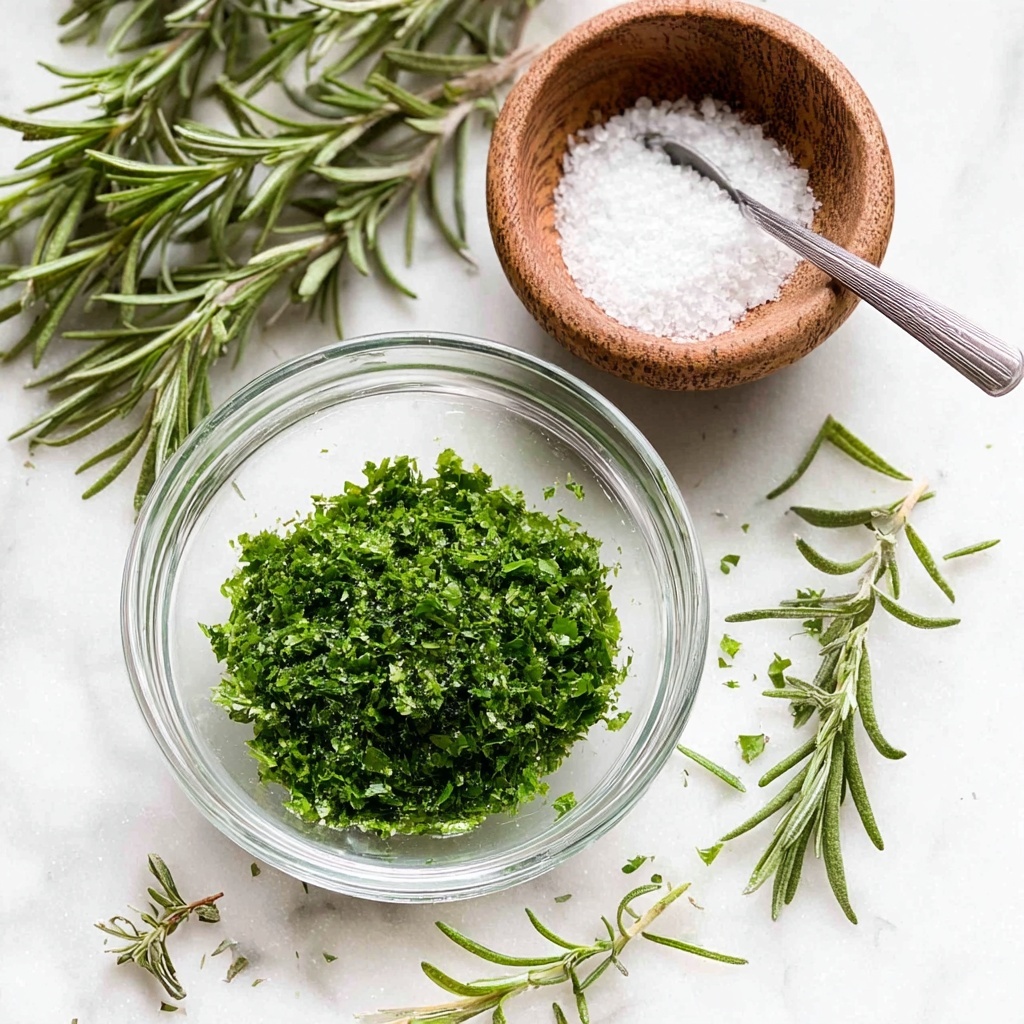
This Rosemary Salt Recipe only requires two humble ingredients that you probably already have, but each plays a key role in creating that vibrant, aromatic seasoning.
- Rosemary sprigs: Four 15 cm or 6-inch sprigs provide the fresh, green herbal flavor that’s essential for the salt’s distinctive aroma and taste.
- Table salt: Just half a teaspoon will perfectly balance the rosemary’s earthiness, turning it into a versatile seasoning.
How to Make Rosemary Salt Recipe
Step 1: Dry the Rosemary
Start by placing a sheet of paper towel on a heatproof plate. Lay out your rosemary sprigs flat and cover them with another sheet of paper towel. This setup keeps the microwave clean and helps the rosemary dry evenly without scorching.
Step 2: Microwave the Rosemary
Pop the prepared plate into the microwave and cook in four 30-second bursts on high. Between each burst, check the rosemary’s texture. You want it completely dry so it crumbles easily, but vibrant green—this preserves the fresh flavor while avoiding any burnt taste common with overheating.
Step 3: Grind Into a Coarse Powder
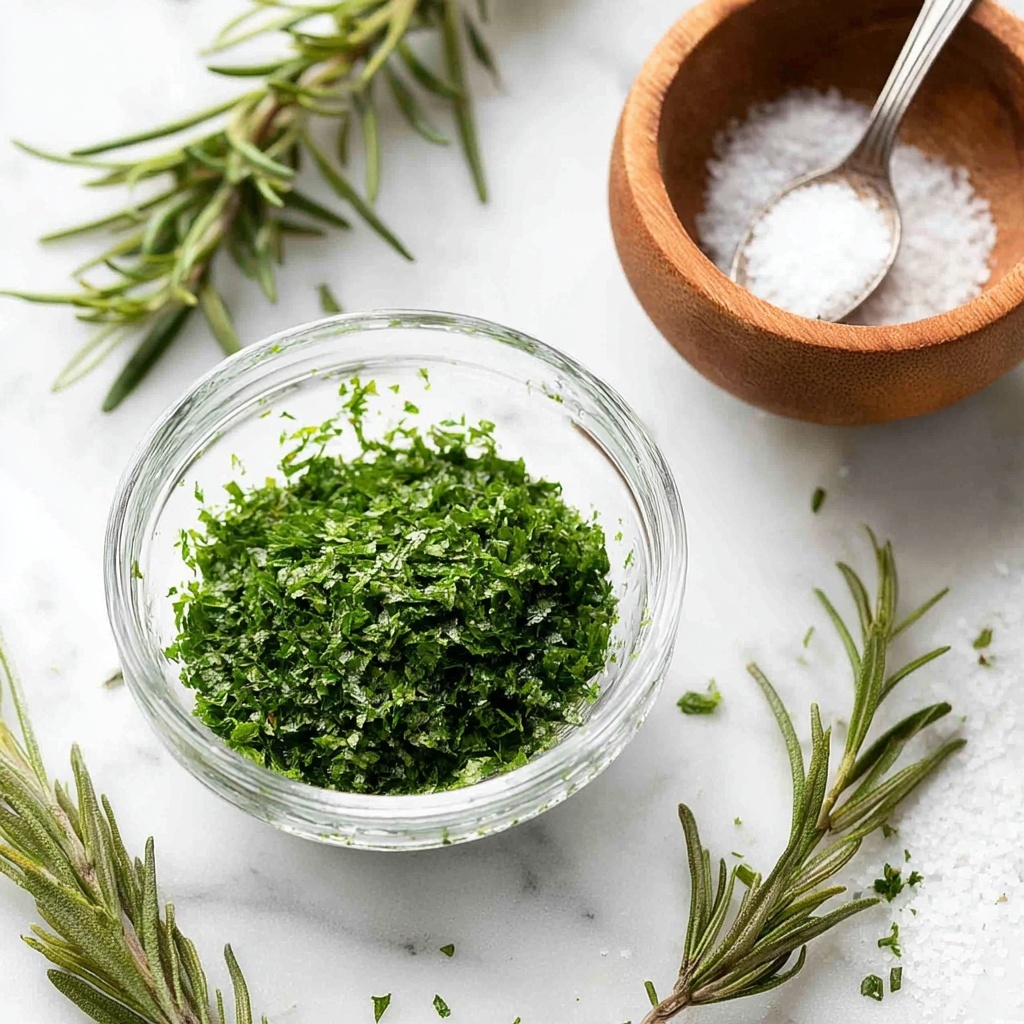
Once dry, use a mortar and pestle or even your fingers to break down the rosemary into a mix of fine powder and small flakes. The variation in texture adds a delightful visual and flavor dimension to the salt.
Step 4: Mix with Salt
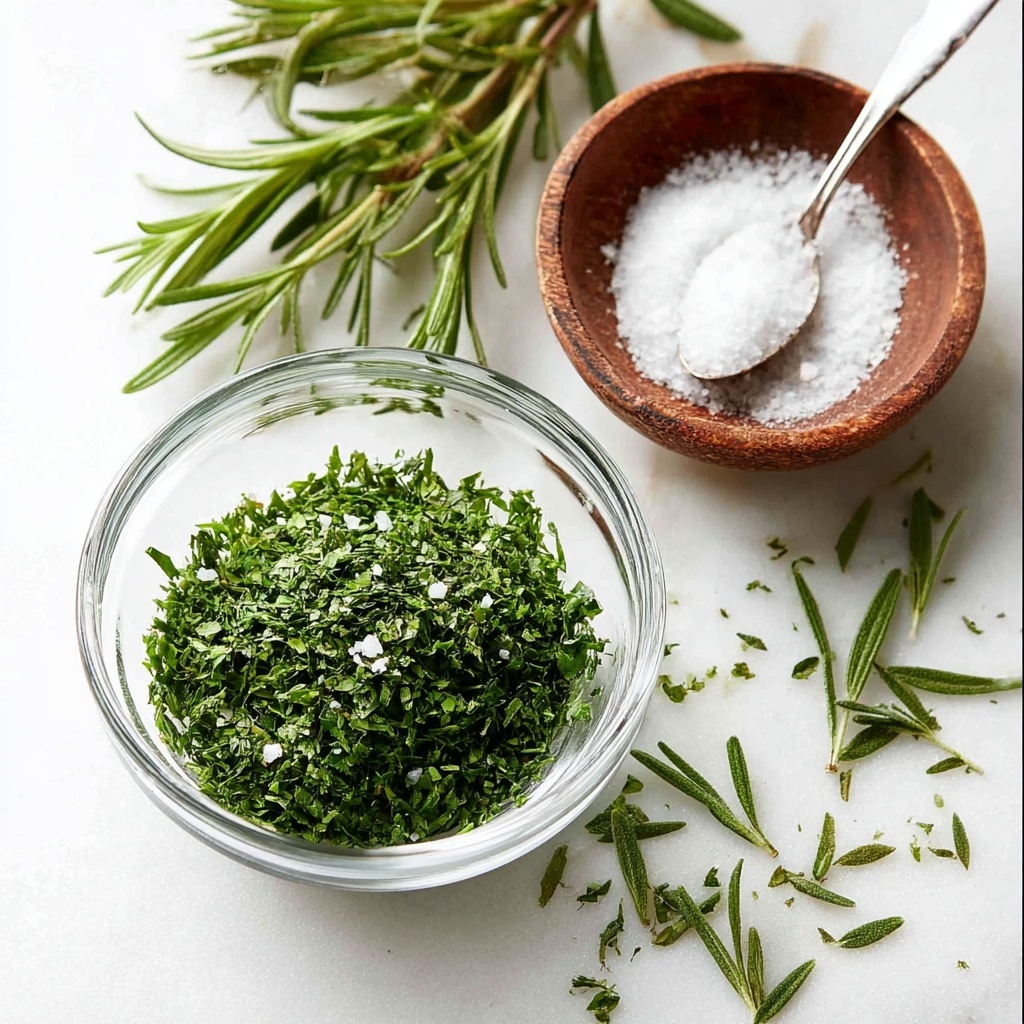
Measure out three teaspoons of your freshly ground rosemary and combine it with half a teaspoon of table salt in a small bowl. Stir them together until evenly mixed — this harmony makes sure each pinch of rosemary salt delivers consistent flavor.
Step 5: Use or Store
Your Rosemary Salt Recipe is now ready to elevate your dishes! Sprinkle it on fries, grilled proteins, cheese muffins, focaccia, or even mix it into salad dressings. Just keep in mind this blend is best used uncooked because rosemary can burn and turn bitter under high heat. Store your rosemary salt in an airtight container in a cool pantry for best longevity.
How to Serve Rosemary Salt Recipe
Garnishes
Sprinkling rosemary salt as a finishing touch is a brilliant way to add color and flavor instantly. It looks stunning on roasted potatoes or fresh avocado slices, and it lifts simple dishes with its rustic flair.
Side Dishes
Use your rosemary salt on side dishes like roasted root vegetables, steamed green beans tossed with olive oil, or warm, crusty bread rubbed with garlic. It’s an effortless upgrade that ties your meal together beautifully.
Creative Ways to Present
Try mixing rosemary salt into compound butter or blending it into dips like hummus or sour cream. You can even rim glassware of savory cocktails with a fine dusting for an herbal twist that surprises and delights.
Make Ahead and Storage
Storing Leftovers
Rosemary salt stores wonderfully in an airtight container away from moisture and direct sunlight. Keep it in your pantry or spice cabinet, and it will stay fresh and flavorful for weeks.
Freezing
Freezing rosemary salt isn’t necessary since it’s a dry, stable seasoning blend. In fact, freezing could introduce moisture and affect the texture. Just keep it dry and room temperature for best results.
Reheating
Because rosemary salt is best used uncooked, you don’t actually need to reheat it. Avoid adding it during cooking to prevent the rosemary from burning. Instead, sprinkle it on right after cooking to maximize aroma and flavor.
FAQs
Can I use dried rosemary instead of fresh for this Rosemary Salt Recipe?
Fresh rosemary gives you the best color and brightness, but if you only have dried, it can work in a pinch. Just reduce the drying step and grind the dried rosemary to mix with salt. The flavor may be a bit less vibrant though.
Is table salt the best type of salt to use?
Table salt is perfect here because its fine grains blend easily with rosemary powder. However, you could experiment with sea salt or kosher salt if you prefer a different texture or flavor intensity.
How long will this rosemary salt last?
Stored properly in an airtight container, rosemary salt should stay fresh for about a month to six weeks, depending on how dry the rosemary was initially. Always check for any changes in smell or color before use.
Can I use this rosemary salt in cooked dishes?
It’s best used as a finishing salt because the rosemary can burn and become bitter in high heat. Sprinkle it on after cooking to enjoy its full aromatic effect.
What other herbs could I try making salt with?
If you love this Rosemary Salt Recipe, try making salt blends with thyme, basil, or oregano for different but equally delicious results. Each herb brings its own character to the salt.
Final Thoughts
This Rosemary Salt Recipe is a small kitchen project with big flavor payoff. It brings an herby, fragrant spark to a variety of dishes and is incredibly simple to make. Trust me, once you try sprinkling it on your favorite foods, you’ll wonder how you ever cooked without it!