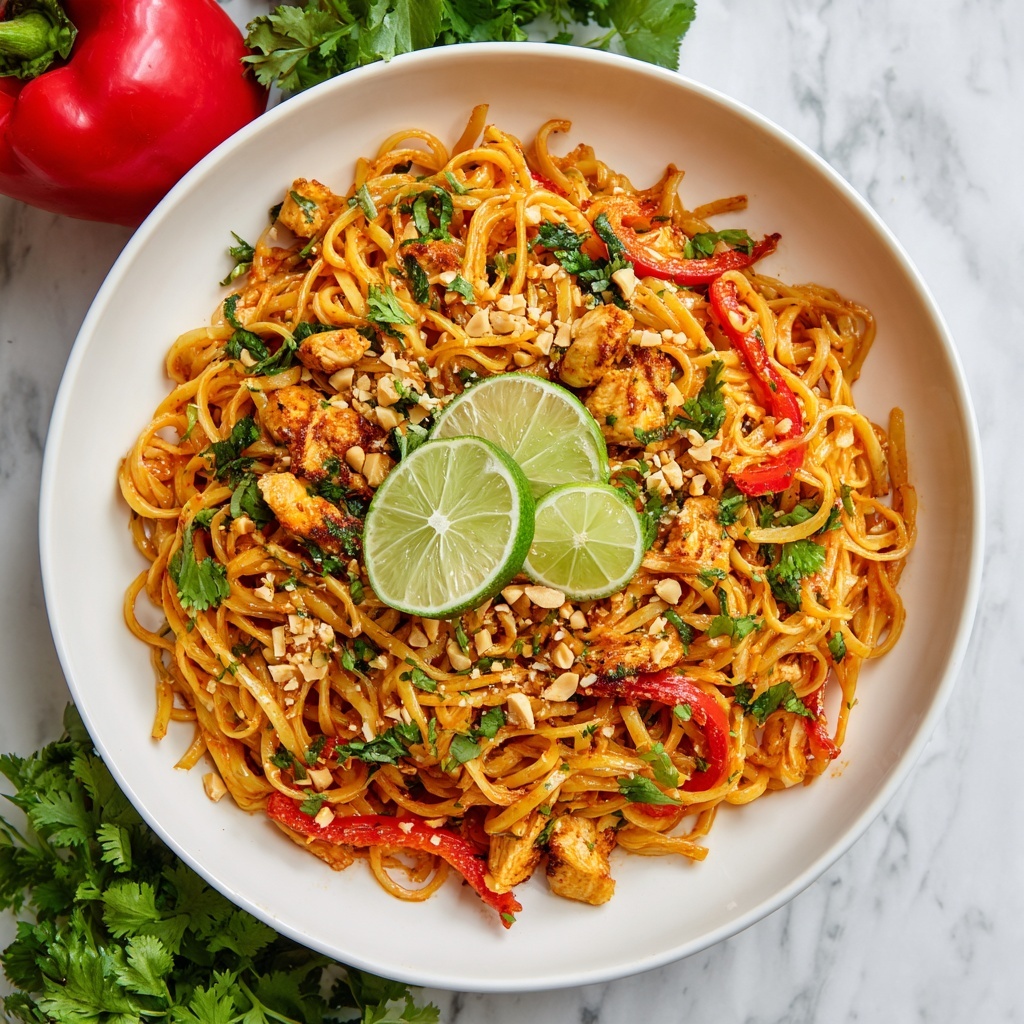
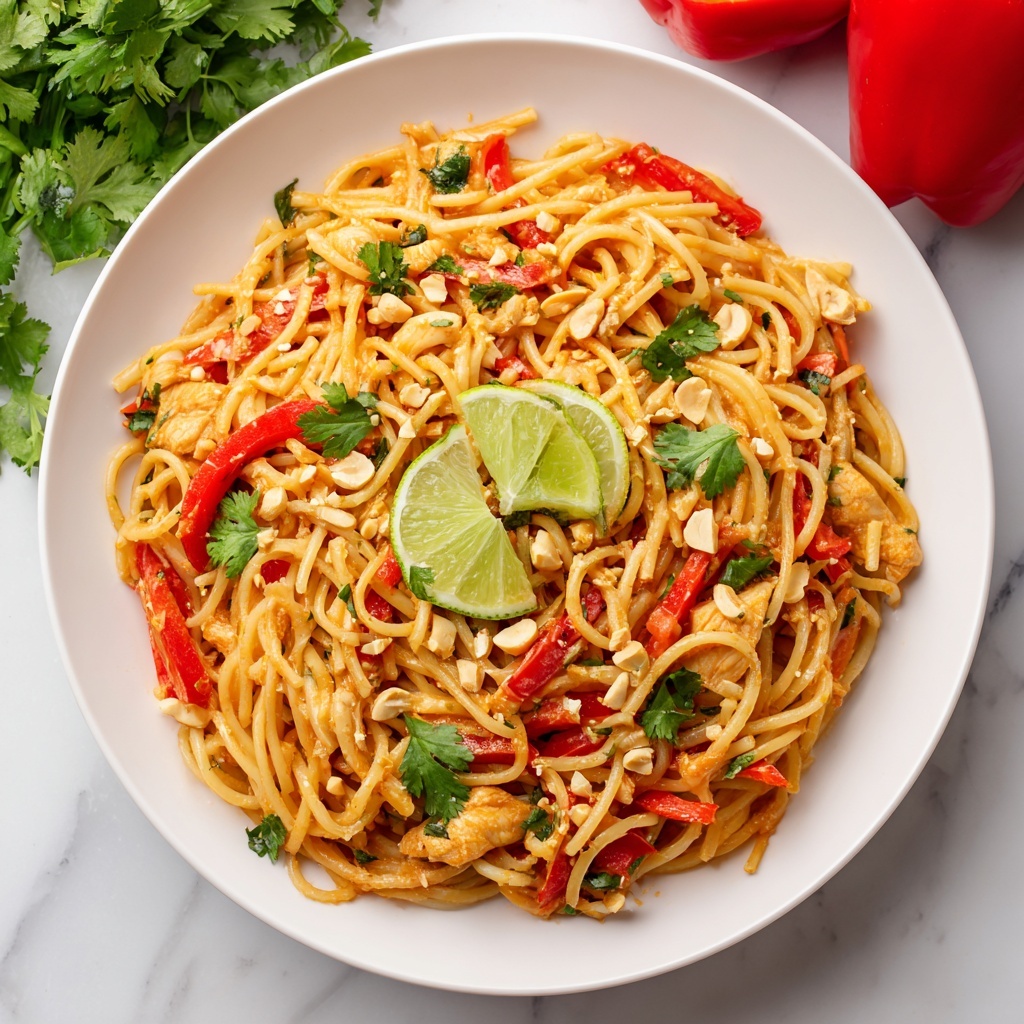
If you are craving an adventure for your taste buds that blends sweet, savory, tangy, and just the right amount of spice, this Chicken Pad Thai Recipe is your perfect go-to. It captures the essence of authentic Thai street food with easy-to-find ingredients and simple steps that anyone can master at home. In every bite, you’ll find a wonderful harmony of tender chicken, fresh vegetables, crunchy peanuts, and a luscious sauce that ties everything together beautifully. Trust me, once you make this Chicken Pad Thai Recipe, it will quickly become a favorite in your dinner rotation.
Ingredients You’ll Need
Gathering a handful of straightforward yet vibrant ingredients lays the foundation for this Chicken Pad Thai Recipe. Each element is carefully chosen to bring a balance of flavors, textures, and colors that make this dish irresistibly tasty and aesthetically pleasing.
- 8 ounce wide rice noodles: These provide the perfect chewy base that soaks up all the delicious sauce.
- 2 chicken breasts (thinly sliced, about 1 lb): Thin slices cook quickly and absorb the seasoning beautifully for tender bites.
- 2 tablespoons vegetable oil: A neutral oil ideal for stir-frying without overpowering flavors.
- 1 teaspoon salt: Enhances the overall taste of the chicken and veggies.
- 1/2 teaspoon black pepper: Adds a mild kick to the dish’s flavor profile.
- 1 red bell pepper (thinly sliced): Brightens the dish with sweetness and vibrant color.
- 1/2 cup shredded carrot: Provides natural sweetness and a lovely crunch.
- 2 large eggs (lightly beaten): Adds richness and a soft scrambled texture that complements the noodles.
- 2 cups fresh or canned bean sprouts: Gives a refreshing crispness essential in Pad Thai.
- 4 green onions (sliced): Infuse a mild onion flavor and extra freshness.
- 1/4 cup fresh cilantro (chopped): Lifts the dish with its bright, herbaceous notes.
- 1/4 cup roasted peanuts (roughly chopped): The signature crunch and earthy flavor that Pad Thai is famous for.
- 3 tablespoons ketchup: Adds a tangy sweetness, playing a unique role in the sauce.
- 2 tablespoons fish sauce: Brings an authentic umami depth crucial to Pad Thai.
- 1 tablespoon sugar: Balances salty and sour with a touch of sweetness.
- 3 garlic cloves (minced): Offers aromatic warmth and zest.
- 1 tablespoon peanut butter: Thickens the sauce and adds a nutty richness.
- Juice of 1 lime (about 2 tbsp): Delivers citrus brightness to cut through richness.
- 1 tablespoon gochujang: Introduces a subtle Korean-inspired spicy sweetness, making the sauce pop.
- 2 tablespoons soy sauce: Provides salty depth and color to the sauce.
- Additional chopped cilantro, roasted peanuts, and lime wedges: For garnishing and extra flavor at serving.
How to Make Chicken Pad Thai Recipe
Step 1: Prepare the Noodles
Start by cooking the rice noodles according to the package instructions — usually a quick soak in hot water will do. Once tender, drain and rinse them under cold water to stop the cooking process and keep them from sticking together. Set these delicious noodles aside; they’ll soon soak up all the wonderful sauce and flavors.
Step 2: Cook the Chicken
Heat 1 tablespoon of vegetable oil in a large skillet or wok over medium-high heat. Add the thinly sliced chicken breasts, seasoning with salt and black pepper. Stir frequently, allowing the chicken to cook through evenly and develop a beautiful light golden exterior. This step should take about 5 to 6 minutes. Once perfectly cooked, remove the chicken from the skillet and set aside for later.
Step 3: Sauté Vegetables and Scramble Eggs
Into the same skillet, pour in your remaining tablespoon of oil. Toss in the thinly sliced red bell pepper and shredded carrot, cooking until they soften slightly, roughly 2 minutes. Push the veggies to one side, pour in the beaten eggs, and scramble until just set. Then patiently combine the eggs and vegetables for a perfect mix of texture and flavor.
Step 4: Combine Chicken, Noodles, and Veggies
Return your cooked chicken to the skillet along with the drained noodles, fresh bean sprouts, and sliced green onions. Toss gently but thoroughly to marry all these textures and tastes together before introducing the sauce.
Step 5: Make the Signature Sauce
In a small bowl, whisk all your sauce ingredients: ketchup, fish sauce, sugar, minced garlic, peanut butter, lime juice, gochujang, and soy sauce, until smooth and harmonious. This magical sauce is what makes this Chicken Pad Thai Recipe bursting with flavor and totally unforgettable.
Step 6: Toss Noodles with Sauce
Pour the sauce generously over your noodle mixture and toss everything well to ensure every strand and bite is coated in the luscious sauce. Let it cook together for another 2 to 3 minutes so the flavors meld and the dish is heated throughout.
Step 7: Finish with Fresh Herbs and Nuts
Turn off the heat and fold in freshly chopped cilantro and roughly chopped roasted peanuts. These fresh additions add layers of brightness and crunch that truly complete the dish.
Step 8: Serve and Enjoy
Your Chicken Pad Thai is now ready to be savored. Immediately plate it up, garnishing with extra cilantro, peanuts, and lime wedges for an irresistible presentation and flavor boost.
How to Serve Chicken Pad Thai Recipe
Garnishes
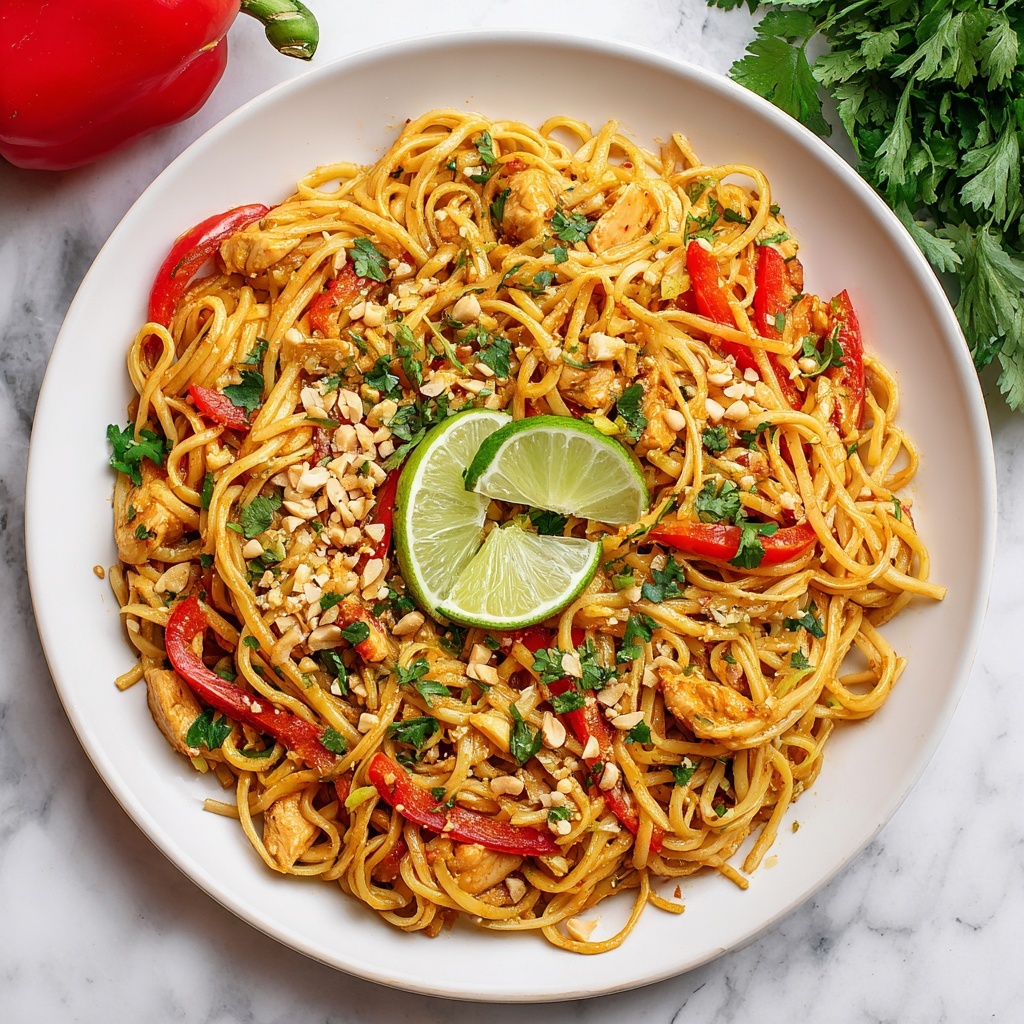
Don’t skip the garnishes! Fresh chopped cilantro, a handful of roasted peanuts, and zingy lime wedges really elevate this Chicken Pad Thai Recipe. They add fresh herbal brightness, delightful crunch, and a bright citrusy burst to each bite, making every forkful exciting.
Side Dishes
This dish pairs wonderfully with light and simple sides like steamed jasmine rice or a crisp cucumber salad with a bit of vinegar and sugar. These sides keep the meal balanced and refreshing without overshadowing the star, which is your Chicken Pad Thai.
Creative Ways to Present
For an inviting family-style feast, serve this pad Thai in a large colorful platter topped with extra peanuts and lime wedges on the side. You can also get creative by wrapping leftover Chicken Pad Thai in lettuce leaves for a fun, handheld twist that’s perfect for lunches or casual gatherings.
Make Ahead and Storage
Storing Leftovers
If you have any leftovers (which is rare because it’s so good), store them in an airtight container in the refrigerator. Try to eat them within 2 days for the best texture and flavor, as the noodles can absorb too much sauce and get soggy over time.
Freezing
Freezing Chicken Pad Thai isn’t recommended because the noodles tend to lose their pleasant chewy texture after thawing. Instead, enjoy this dish fresh or store leftovers in the fridge for a quick meal the next day.
Reheating
To reheat, gently warm the leftovers in a skillet over medium heat, stirring occasionally. Adding a splash of water or extra lime juice can help revive some of the dish’s original vibrancy and prevent it from drying out.
FAQs
Can I use chicken thighs instead of chicken breasts?
Absolutely! Chicken thighs are flavorful and tend to stay juicier, which makes a great alternative if you prefer a richer taste. Just slice them thinly as you would with the breasts to ensure even cooking.
Is it possible to make this recipe vegetarian?
Yes! Simply omit the chicken and replace fish sauce with a vegetarian soy sauce alternative. You can add tofu or extra vegetables like mushrooms or zucchini to keep the dish hearty.
What can I use if I can’t find gochujang?
If gochujang is not available, substitute with a mixture of chili paste and a touch of honey or brown sugar to mimic its sweet-spicy flavor. It won’t be identical but will still add a lovely kick to the sauce.
Can I prepare any parts of this Chicken Pad Thai Recipe in advance?
You can cook and cool the rice noodles ahead of time and store them in the fridge. It’s best to make the stir-fry fresh to maintain the best texture and flavor.
How spicy is this dish?
This version has a mild to moderate spice level thanks to gochujang, which has more depth than heat. You can adjust the amount or substitute with a milder chili paste if you prefer less spice.
Final Thoughts
Now that you’ve got the complete, easy-to-follow Chicken Pad Thai Recipe, I can’t wait for you to try making it yourself. This dish is such a joy to prepare and even more satisfying to eat, packing so much flavor and texture in every bite. Whether you’re cooking for family, friends, or treating yourself, this recipe is a sure way to impress and satisfy those Pad Thai cravings. Happy cooking!
Print
Chicken Pad Thai Recipe
- Prep Time: 15 minutes
- Cook Time: 15 minutes
- Total Time: 30 minutes
- Yield: 4 to 4 servings
- Category: Main Course
- Method: Stovetop
- Cuisine: Thai
Description
This Chicken Pad Thai recipe offers a delicious and vibrant take on the classic Thai street food favorite. Featuring tender chicken breast slices, wide rice noodles, fresh vegetables, and a tangy, savory sauce made with a unique blend of ketchup, fish sauce, and gochujang, this dish balances sweet, sour, and umami flavors perfectly. Ready in just 30 minutes, it’s an ideal dish for a flavorful weeknight dinner.
Ingredients
Main Ingredients
- 8 ounces wide rice noodles
- 2 chicken breasts, thinly sliced (about 1 lb)
- 2 tablespoons vegetable oil (or another neutral oil)
- 1 teaspoon salt
- 1/2 teaspoon black pepper
- 1 red bell pepper, thinly sliced
- 1/2 cup shredded carrot
- 2 large eggs, lightly beaten
- 2 cups fresh or canned bean sprouts
- 4 green onions, sliced
- 1/4 cup fresh cilantro, chopped
- 1/4 cup roasted peanuts, roughly chopped
Sauce Ingredients
- 3 tablespoons ketchup
- 2 tablespoons fish sauce
- 1 tablespoon sugar
- 3 garlic cloves, minced
- 1 tablespoon peanut butter
- Juice of 1 lime (about 2 tablespoons)
- 1 tablespoon gochujang
- 2 tablespoons soy sauce
For Garnish
- Additional chopped cilantro
- Roasted peanuts, roughly chopped
- Lime wedges
Instructions
- Cook Noodles: Prepare the rice noodles according to the package instructions. Once cooked, drain them and rinse with cold water to stop the cooking process. Set aside while preparing other ingredients.
- Cook Chicken: Heat 1 tablespoon of vegetable oil in a large skillet or wok over medium-high heat. Add the thinly sliced chicken, seasoning with 1 teaspoon salt and 1/2 teaspoon black pepper. Stir frequently and cook until the chicken is fully cooked through, about 5-6 minutes. Remove the cooked chicken from the skillet and set aside.
- Sauté Vegetables and Scramble Eggs: In the same skillet, add the remaining 1 tablespoon of oil. Sauté the red bell pepper and shredded carrot for about 2 minutes until they soften slightly. Push the vegetables to one side of the skillet, pour in the beaten eggs, and scramble them until fully cooked. Then stir the eggs together with the vegetables to combine.
- Add Noodles and Chicken: Return the cooked chicken to the skillet. Add the cooked rice noodles, bean sprouts, and sliced green onions. Toss everything well to combine all components evenly.
- Prepare Sauce: In a small bowl, whisk together ketchup, fish sauce, sugar, minced garlic, peanut butter, lime juice, gochujang, and soy sauce until you get a smooth and uniform sauce.
- Combine Sauce and Ingredients: Pour the prepared sauce over the noodle mixture in the skillet. Toss thoroughly to ensure every ingredient is coated with the sauce. Cook for an additional 2-3 minutes, allowing the flavors to meld and the dish to heat through evenly.
- Finish and Garnish: Remove the skillet from heat and stir in the chopped cilantro and roughly chopped peanuts to add fresh flavor and crunch. Mix well to distribute evenly.
- Serve: Serve immediately, garnished with additional cilantro, roasted peanuts, and lime wedges on the side for an extra burst of freshness and zest.
Notes
- You can substitute chicken with shrimp or tofu for variation.
- Be sure not to overcook the noodles to maintain the ideal chewy texture.
- If you cannot find gochujang, you may use a mild chili paste or omit it for less heat.
- Adjust the amount of soy sauce and fish sauce to your taste preference for saltiness.
- Use fresh lime juice for the best tangy flavor.
- Peanuts can be toasted for extra depth of flavor before adding.
- For a gluten-free version, ensure the soy sauce and ketchup are gluten-free.